Graduate Research Assistant · Concordia University

Mohammad Saalim Badar, MASc

Water-resources and environmental engineer in Montréal. I run anaerobic-digestion experiments on municipal and agricultural waste and validate models against them, building on earlier work in water treatment, GIS field surveys and hydraulic modelling.

Now
Biogas & resource-recovery research, NSERC PURE CREATE Fellow
Open to
Collaboration in any field, and conversations about roles
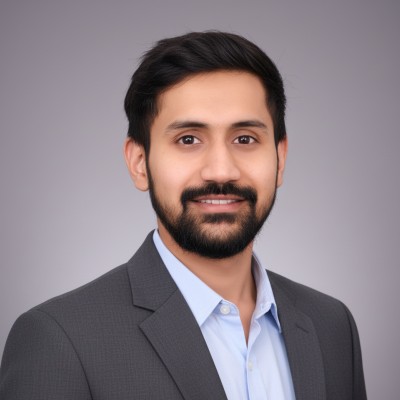
Portrait of Mohammad Saalim Badar
45.4973° N, 73.5790° W · Montréal
  • 5peer-reviewed articles Chemical Engineering Journal · Separation and Purification Technology · Journal of Molecular Liquids · Water Practice & Technology · Desalination and Water Treatment
  • 3awards Best Student Paper, CSCE 2026 · Outstanding Work-in-Progress, IGWC 2022 · Design & Innovation Award 2022
  • 3conference presentations CSCE, Québec City 2026 · International Groundwater Conference, IIT Roorkee 2022 · Int. Conference on Water Technologies, IIT Bombay 2022
  • 4countries of research & work India · Malaysia · Canada · United States
sim potential flow past a cylinder · u∞ = 1.0 m/s · click anywhere to drop a bridge pier

About

From groundwater surveys in Aligarh to biogas reactors in Montréal.

I trained as a civil engineer at Aligarh Muslim University, where I also led a GPS survey team on a national property-mapping project and published a GIS study of heavy-metal risk in the city's groundwater.

Research internships in India, Malaysia and Canada focused on water treatment, and my papers from that period cover graphene-oxide filters, nanocomposite adsorbents, redox nanomaterials and adsorptive membranes. In 2024 I joined Concordia University for an MASc in Civil/Environmental Engineering.

As a Graduate Research Assistant and NSERC PURE CREATE Fellow, I run anaerobic digesters on municipal and agricultural waste, analyse biogas and digestate by gas chromatography, and check model predictions against what the reactors actually do. In 2026 I joined an NSF-supported farm decision-support project at Oklahoma State University and received the Best Student Paper Award at the CSCE conference in Québec City.
Journey · 2021 → 2026

Five years, four countries.

Field surveys, lab research and industry work across India, Malaysia, Canada and the United States. Scroll the timeline, or select a place on the map.

Now showing 2021 Five districts, India GPS Surveyor, Central Waqf Council Project
  1. Sep 2021 – Jun 2022 Field

    GPS Surveyor

    Central Waqf Council Project, Government of India

    • Surveyed and mapped properties with GPS across five districts, part of a national initiative that digitised about 872,000 properties.
    • Built and updated spatial datasets in ArcGIS Enterprise and uploaded field data to the government portal.
    • Led a team of 10 surveyors through field coordination and quality checks; the team beat its targets and finished two months early.
  2. Mar – Jun 2022 Research

    Research Intern

    Department of Applied Physics, Aligarh Muslim University

    • Synthesised nanoparticles and graphene-oxide composites.
    • Ran photocatalysis experiments on pollutant degradation.
  3. Jul – Aug 2022 IndustryAward

    Environmental Intern

    Engineering and Environmental Solutions Ltd., India

    • Developed CAD models and specifications for a bottom-depth sampler compliant with ASTM D4057, meeting provincial-government requirements for weight, materials and operating mechanism.
    • Worked in a three-person team with local fabricators to build a prototype and prepare CAD files for manufacturing handoff.
    • Won the Design and Innovation Award: $1,000 in funding for product design and fabrication.
  4. 2022 Award

    First conference talks

    IIT Roorkee · IIT Bombay

    • International Groundwater Conference, IIT Roorkee: Outstanding Work-in-Progress Award.
    • International Conference on Water Technologies, IIT Bombay.
  5. Dec 2022 – Mar 2023 Research

    Research Intern

    Universiti Kebangsaan Malaysia

    • Conducted literature reviews, identified research gaps and strengthened scientific-writing and research-methodology skills.
    • Co-authored a critical review of nanomaterial-driven redox reactions, published in Desalination and Water Treatment (2024).
  6. Jul – Sep 2023 Research

    Mitacs Globalink Research Intern

    Mitacs Globalink Research Internship, Canada

    • Developed point-of-use water-treatment devices from graphene-oxide-based materials.
    • Quantified contaminant removal with ICP-MS and fluorescence spectroscopy.
    • Refined the design through testing and data analysis, reaching 80% heavy-metal and 85% microplastic removal.
  7. 2024 Education

    Bachelor of Engineering, Civil Engineering

    Aligarh Muslim University, India

    • Graduated with first-author work in Water Practice & Technology: a GIS-based assessment of groundwater vulnerability to heavy metals in urban Aligarh.
    • Co-authored the graphene-oxide–sand adsorbent filter study in the Journal of Molecular Liquids.
  8. Sep 2024 – present ResearchEducation

    Graduate Research Assistant · MASc

    Concordia University, Montréal · NSERC PURE CREATE Fellow

    Projects: municipal solid-waste biogas production and modelling; agricultural-waste resource recovery in cold climates.

    • Run anaerobic digesters and lab and field tests, validating model results against experimental observations.
    • Analyse biogas and digestate by chromatography to assess system efficiency and resource recovery across experimental cycles.
    • Coordinate regular stakeholder meetings, keep year-round experimental records and write progress reports.
  9. Jan – Mar 2026 Research

    Visiting Researcher / Project Collaborator

    Oklahoma State University, USA

    • Collaborated on a US NSF-supported decision-support platform that gives Oklahoma farmers field-specific climate forecasts, fertiliser requirements and greenhouse-gas emission estimates.
    • Ran environmental modelling, statistical analysis and sustainability assessments in OpenLCA and Envision.
    • Operated gas chromatography and interpreted experimental datasets for sustainable-agriculture analysis.
  10. 2026 AwardEducation

    Best Student Paper Award

    Canadian Society for Civil Engineering Conference, Québec City

    • Recognised for work on psychrophilic (low-temperature) anaerobic digestion of agricultural waste.
    • MASc in Civil/Environmental Engineering, Concordia University (2026).

Current research · Concordia University · Sep 2024 → present

Turning waste into energy, even through a Canadian winter.

Anaerobic digestion lets microbes turn organic waste into methane-rich biogas and a nutrient-rich digestate. Cold slows those microbes down, which is the practical problem for farms and municipalities in climates like Quebec's. My work measures that process in the lab and tests how well models predict it.

Project 01

Biogas from municipal solid waste

Production and modelling of biogas from the organic fraction of municipal solid waste, with model results checked against laboratory digesters.

Project 02

Agricultural-waste resource recovery in cold climates

Psychrophilic (low-temperature) digestion of agricultural residues to recover energy and nutrients where heating a digester is costly. This work earned the CSCE 2026 Best Student Paper Award.

Process · click a stage

Feedstock MSW · agri-residues Digester 35 °C · active Biogas CH₄ + CO₂ → energy Digestate nutrients → farmland

Warm digester: microbes are active and biogas bubbles up quickly. See the kinetics

Stage · Digester

Inside the reactor

Laboratory digesters run at controlled temperatures, including the cold (psychrophilic) conditions that matter for Canadian farms. Process stability is tracked through pH, alkalinity and volatile fatty acids, with year-round experimental records.

  • pH
  • Alkalinity
  • VFA
  • Temperature logging

Collaboration · Jan – Mar 2026

Farm decision support at Oklahoma State University

A US NSF-supported platform giving Oklahoma farmers field-specific climate forecasts, fertiliser requirements and greenhouse-gas estimates. I contributed environmental modelling, statistics and sustainability assessment with OpenLCA and Envision.

Recognition · 2026

Best Student Paper Award

Canadian Society for Civil Engineering Conference, Québec City.

Model lab

Four models from my toolkit. Try them.

Move the sliders and hover the charts to read values. These are textbook equations with illustrative parameters, not experimental data from my projects.

How much slower does a digester produce methane when it runs cold?

Max. rate Rm
–
Lag phase λ
–
Time to 80% yield
–
vs. 35 °C
–

B(t) = B₀ · exp{ −exp[ Rm·e·(λ − t) / B₀ + 1 ] } · Rm(T) = Rm,35 · θ(T−35) · T80: time to reach 0.8·B₀

Modified Gompertz model. B₀ = 350 mL CH₄ g⁻¹ VS, Rm,35 = 25 mL g⁻¹ d⁻¹, λ35 = 2 d, θ = 1.07.

Selected work · 9 projects

From the lab bench to the field.

Bioenergy2024 →

Biogas from municipal solid waste

Lab digesters and model validation for biogas production from the organic fraction of MSW.

GC biogas & digestate analysis

  • Anaerobic digestion
  • Gas chromatography
  • Model validation

Bioenergy2024 →

Cold-climate resource recovery

Psychrophilic digestion of agricultural residues for energy and nutrient recovery without heating.

Best Student Paper · CSCE 2026

  • Psychrophilic AD
  • Agricultural waste
  • Circular bioeconomy

Sustainability2026

Farm decision-support platform

NSF-supported tool for Oklahoma farmers: climate forecasts, fertiliser needs and GHG estimates.

OpenLCA · Envision · statistics

  • LCA
  • GHG emissions
  • Oklahoma State University

Water treatment2023

Graphene-oxide point-of-use treatment

Mitacs Globalink project: GO-based devices for household water, tested for heavy metals and microplastics.

80% heavy metals · 85% microplastics removed

  • Graphene oxide
  • ICP-MS
  • Fluorescence spectroscopy

Water treatment2024

Low-cost GO–sand adsorbent filter

Synthesis, characterisation and breakthrough modelling of a graphene-oxide–sand filter for lead and chromium.

Pb²⁺ · Cr ions · fixed-bed modelling

Water treatment2025

Nanocomposite beads, engineered pores

Beads with designed pore architecture for better removal of emerging contaminants from water.

Emerging contaminants

GIS2024

Groundwater vulnerability, urban Aligarh

First-author study mapping heavy-metal contamination risk with water-quality pollution indices in GIS.

First author · pollution indices

Survey2021–22

National property GPS survey

Field GPS mapping across five districts for a national digitisation effort covering about 872,000 properties.

Led 10 surveyors · 2 months early

  • GPS surveying
  • ArcGIS Enterprise
  • Team lead

Design2022

ASTM D4057 bottom-depth sampler

CAD design, specifications and a fabricated prototype meeting provincial-government requirements.

Design & Innovation Award · $1,000

  • CAD
  • Prototyping
  • Standards compliance

Publications · 5 peer-reviewed · 2024 → 2026

Peer-reviewed research.

  1. 2026
  2. 2025
  3. 2024
  4. 2024
  5. 2024

Co-author network

28 co-authors across five papers

Hover a paper or a person to trace the links. Select a paper to jump to it.

Conference presentations

  • 2026 Canadian Society for Civil Engineering (CSCE) Conference, Québec City Best Student Paper Award
  • 2022 International Groundwater Conference, IIT Roorkee, India Outstanding Work-in-Progress Award
  • 2022 International Conference on Water Technologies, IIT Bombay, India

Toolkit

Software, instruments and methods.

Select a tool to see where I have used it.

Water-resources & hydraulic modelling

GIS, CAD & field survey

Lab & environmental testing

Data, sustainability & reporting

Contact

Open to collaboration in any field.

I enjoy work that crosses disciplines: environmental, civil, agricultural, data or policy. If you have a research idea, a field or lab project, or a role you'd like to talk about, send me a message and I'll reply.

What would you like to discuss?

Messagedirect to inbox